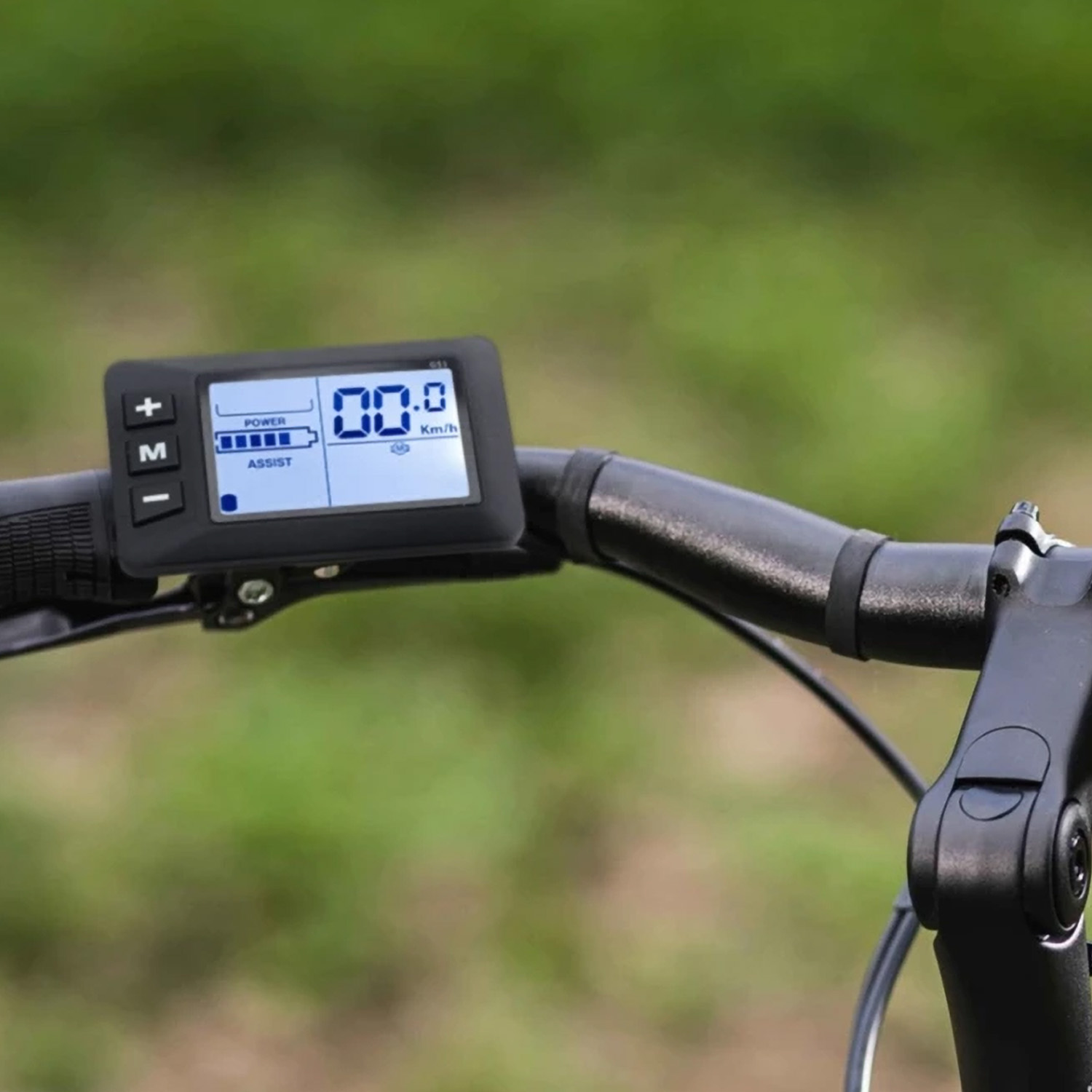
The electric bicycle display is a smart interactive terminal mounted on the handlebars, used to display real-time riding data, vehicle status, and control auxiliary functions.
1. Core Functions
Basic information displayed: Vehicle speed, mileage (single/cumulative), battery charge, remaining range, etc.
Power Assist Mode Control: Supports multiple power assist settings (such as ECO, NORMAL, and SPORT), and some models offer adjustable power assist curves.
Smart Interaction: Bluetooth connectivity to mobile apps, GPS navigation, music playback, call notifications, etc.
Fault Diagnosis: Displays error codes and indicates abnormal conditions such as motor overheating and battery undervoltage.
Environmental Adaptation: Features include light-sensing automatic backlight adjustment, temperature display, and automatic headlight control.
2. Appearance: Compact design and environmental adaptability
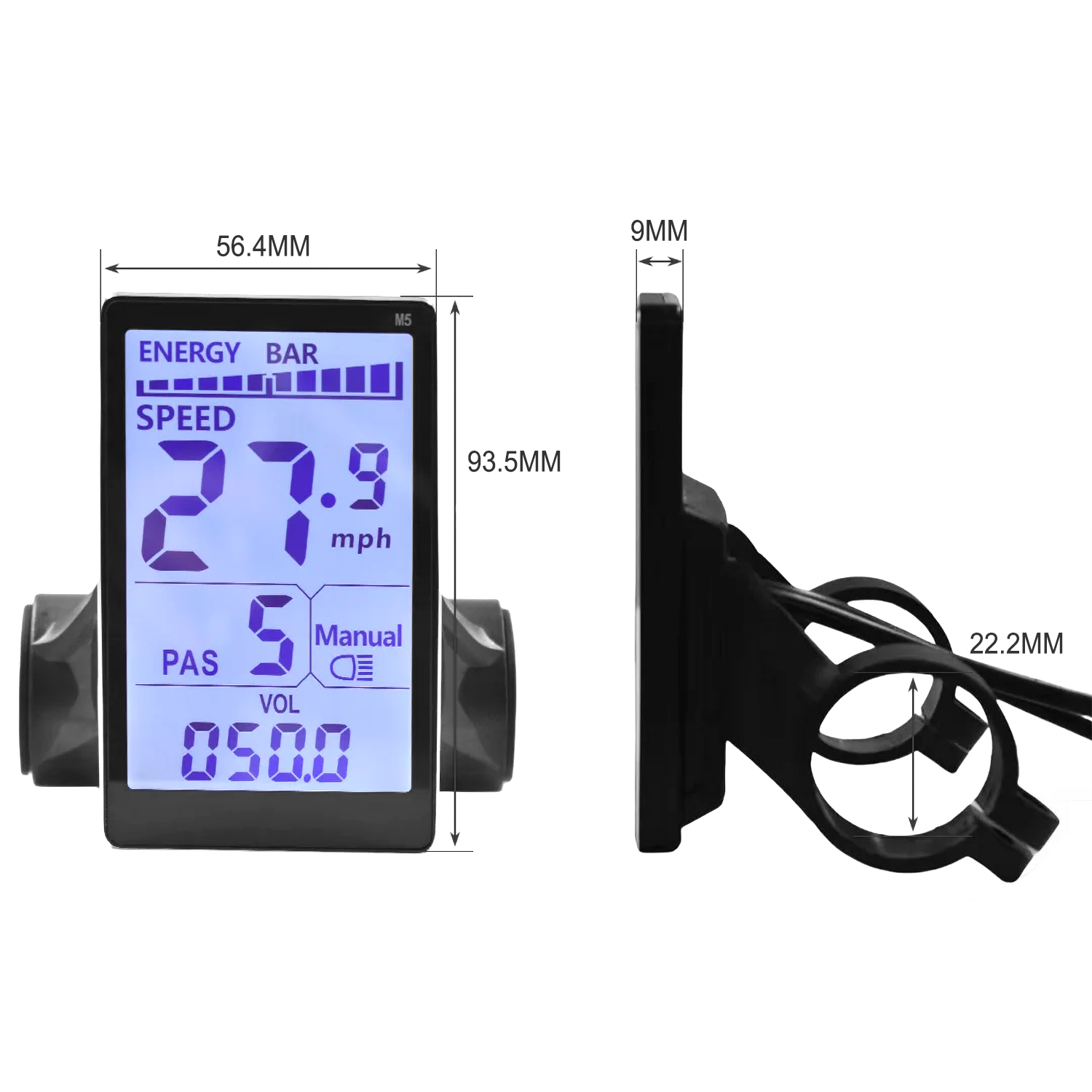
Size and Shape: Mainstream sizes range from 3.5 to 6.5 inches, primarily rectangular, with some high-end models featuring curved or circular designs.
Material and Protection:
Casing: High-strength plastic or aluminum alloy, dustproof, waterproof (IP54 or higher), and impact-resistant. Screen: Made of tempered glass or acrylic with a scratch-resistant coating. Some models support touchscreen operation.
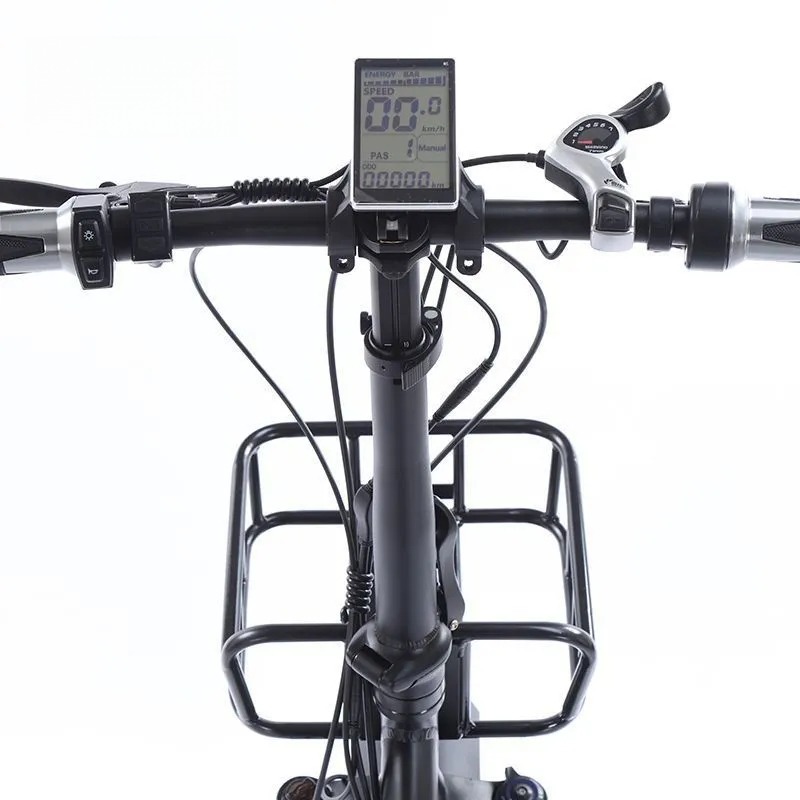
Mounting Method: Secures to the center or side of the handlebar via a bracket, with adjustable angles to suit different riding positions.
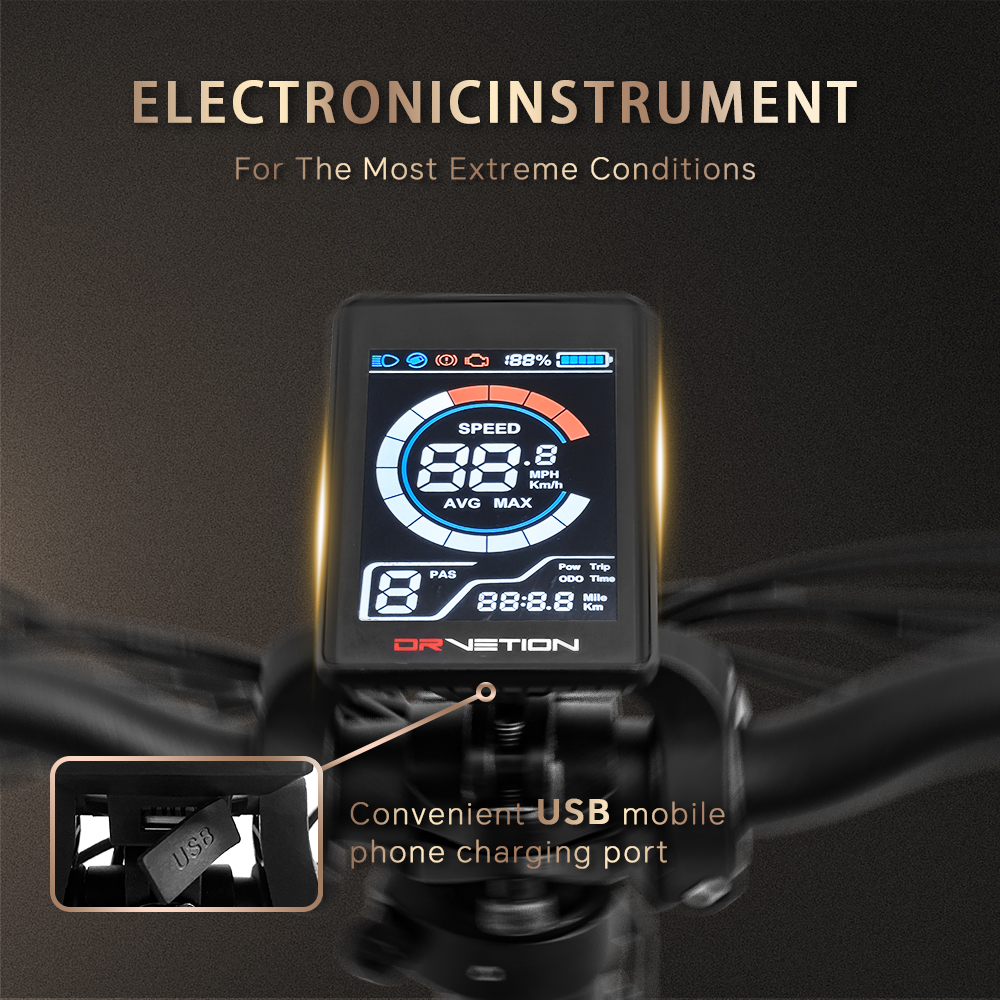
Ports and Expansions: Equipped with a USB charging port, a TF card slot (for navigation map storage), and some models integrate physical buttons or knobs.
3. Functional Type: A tiered design from basic to intelligent
Basic Model (LED/Monochrome LCD):
Displays basic information such as speed, battery charge, and mileage.
Applicable Scenarios: Commuting, low-cost vehicles.
Representative Model: Bafang DP E162/163 (LED instrument panel).
Advanced Model (TFT Color Screen):
Displays color maps, calorie consumption, real-time traffic conditions, and multimedia controls.
Features: Voice interaction, social sharing (such as uploading ride trajectories).
Applicable Scenarios: Sport cycling, long-distance touring.
Representative Model: Bafang DP C010.C/CB (TFT instrument panel).
High-end Model (Outdoor High-Brightness Screen):
Technical Parameters: Brightness ≥ 1000 cd/m², supports extreme operating temperatures from -30°C to 70°C.
Additional Features: Intelligent light sensing, preheating start, high and low temperature protection.
Applicable Scenarios: Industrial vehicles, polar exploration.
4. Structural Components: Modular and integrated design
Display Module:
Screen Type: LED, LCD dot matrix, TFT color, OLED (high-end model).
Backlight Technology: LED edge-lit or direct-lit, with automatic brightness adjustment.
Control Module:
Main Control Chip: Based on an ARM Cortex-M series MCU, with a processing speed of ≥ 100MHz.
Communication Interfaces: CAN bus, Bluetooth 5.0, Wi-Fi module (for OTA updates).
Power Module:
Input Voltage: Supports automatic identification of 24V/36V/48V electric vehicle voltages.
Low Power Design: Standby power consumption ≤ 0.5W, and battery life synchronized with the vehicle battery.
Sensor Integration:
Speed sensor: Hall effect or magnetic encoder, accuracy of ±1 km/h.
Temperature sensor: Monitors the temperature of the screen and internal components to prevent overheating and damage.
5. Differences from Standard Displays: Function-driven, differentiated design
Environmental Adaptability:
E-bike displays: Required to pass vibration testing (simulating bumpy roads) and high- and low-temperature cycling testing (-20°C to 60°C).
Standard displays: Typically suitable only for indoor or static environments, without dust or water resistance requirements.
Interaction Logic:
E-bike displays: Prioritize displaying key data (such as battery level and speed), requiring single-handed operation.
Standard displays: Emphasize multitasking and visual effects, with higher interaction complexity.
Power Consumption Control:
E-bike displays: Average power consumption ≤ 2W, supporting dynamic refresh rate adjustment.
Standard displays: Power consumption can reach over 10W, regardless of battery life.
6. Application Scenarios: From daily commuting to professional fields
Urban commuting: Displays real-time traffic information and navigation routes, supporting seamless mobile phone connectivity. Representative models: NIU electric and Ninebot series.
Sports Cycling:
Records cycling data (power, cadence, heart rate) and supports synchronization with third-party platforms such as Strava.
Representative models: Specialized Turbo Creo and Trek Domane+.
Industrial and Specialty Vehicles:
Designed to withstand extreme environments, supports CAN bus communication with the vehicle's ECU.
Representative applications: Logistics delivery vehicles and mining transport vehicles.