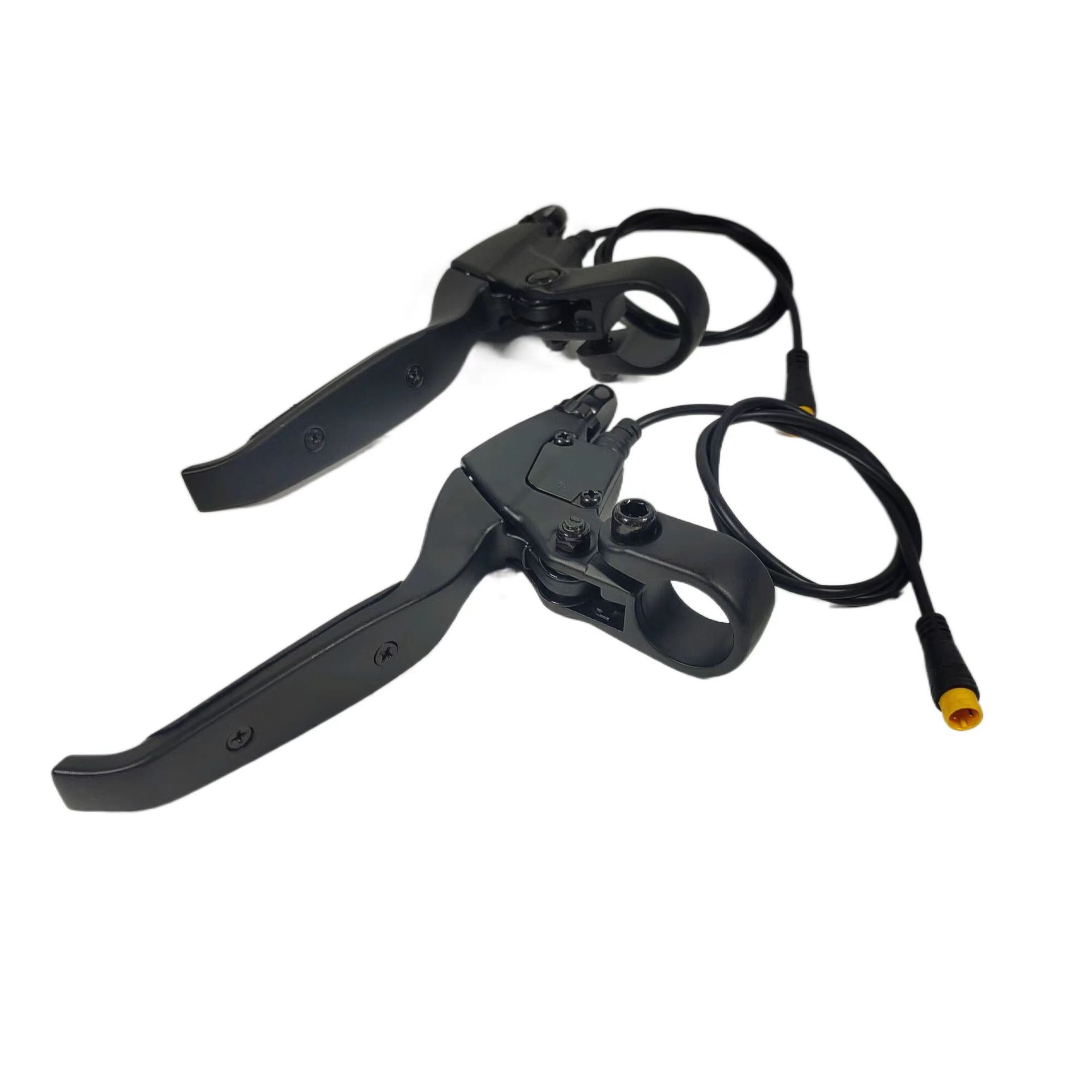
The brake handle of an electric bicycle is a key component in the rider's control of the braking system. Squeezing the handle triggers the braking mechanism, converting kinetic energy into heat to slow or stop the bike.
1. Core Functions
Safety Control: Quickly respond in emergency situations to avoid accidents.
Motor-Linked: Modern e-bike brake handles often have an integrated motor disconnect switch, which automatically disconnects motor power when braking, preventing conflict between braking and driving.
Comfort: Ergonomic design reduces fatigue during long rides.
2. Appearance
Design Style:
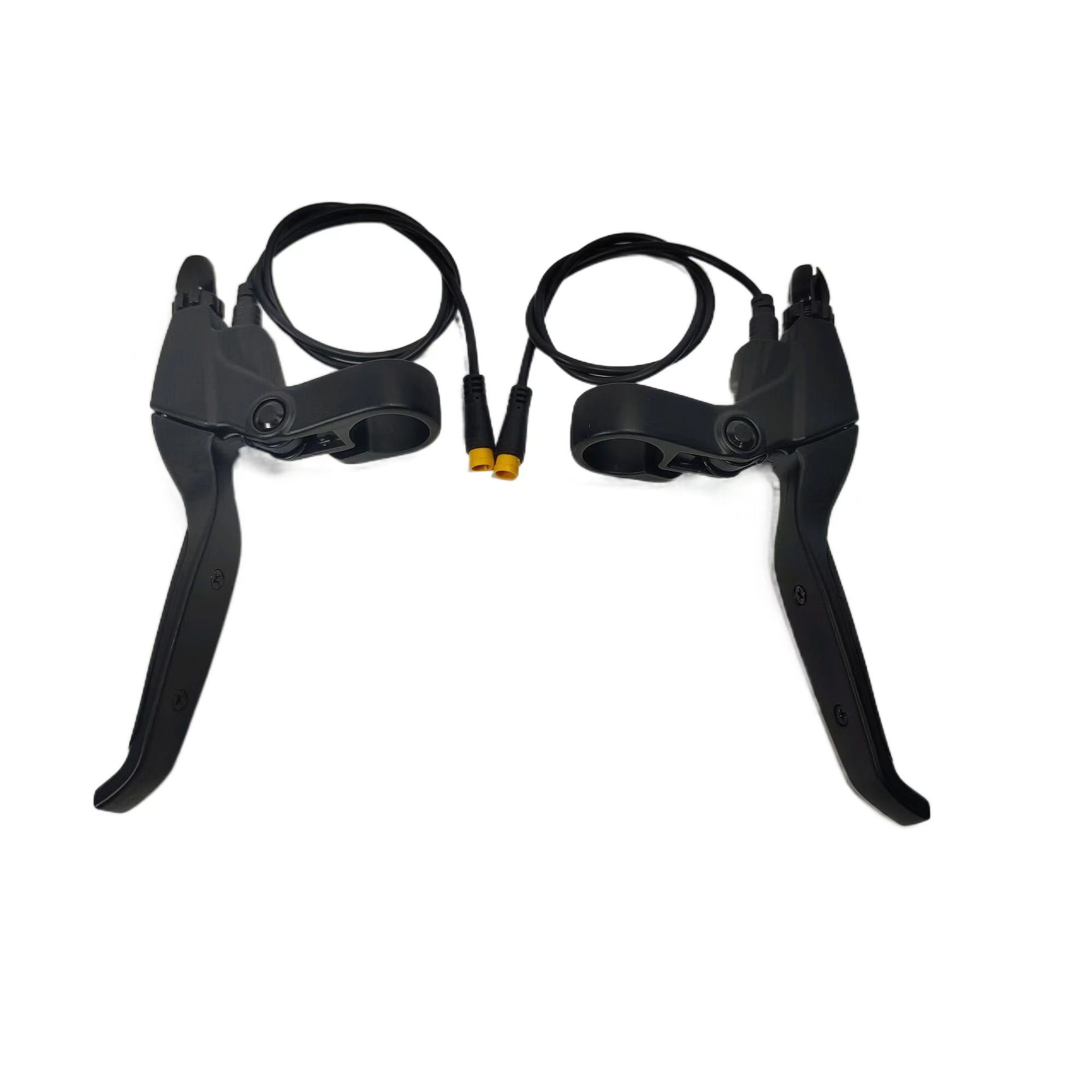
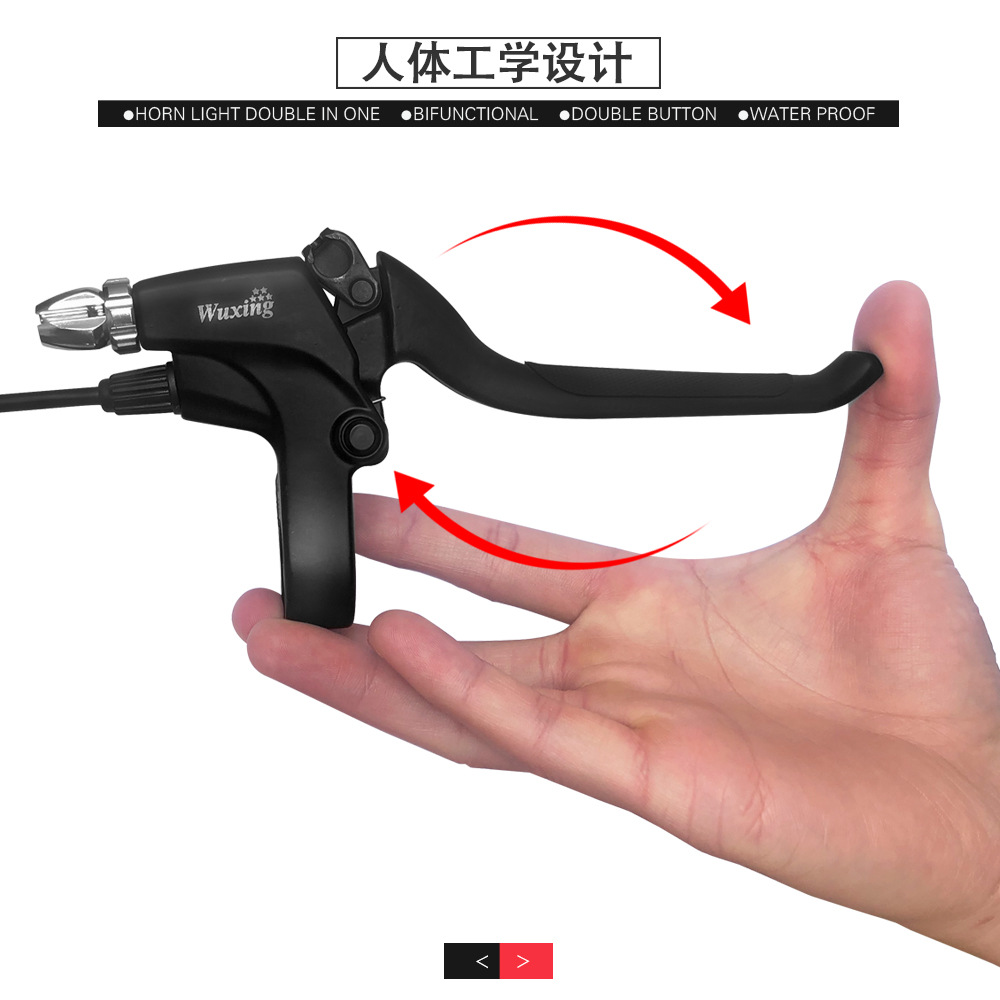
Simple and Streamlined: Most brake handles feature a curved design that conforms to the curve of the palm, and a non-slip textured surface enhances grip stability.
Integrated Design: Some high-end models integrate the brake handle with the shifter, display, or lighting control for enhanced ease of use.
Color and Logo: Primarily black and silver, some models use color-coded logos to distinguish between left and right handles or functional areas.
Size and Compatibility:
Lengths typically range from 80-120mm, accommodating standard handlebar diameters of 22.2mm or 31.8mm.
Adjustable handlebars (e.g., 10-15mm reach) accommodate various hand sizes.
Main Material:
Aluminum Alloy (6061-T6): Lightweight (approximately 150-200g) and corrosion-resistant, forged for strength, and anodized for wear resistance.
Composite Materials: Some low-end models use fiberglass-reinforced plastic, which offers lower cost but less durability.
Key Component Materials:
Piston/Seals: Hydraulic brake handles use stainless steel or ceramic pistons, with rubber seals ensuring a tight seal.
Cables/Hose: Mechanical brakes use galvanized steel cables, while hydraulic brakes use nylon braided hoses, which are stretch-resistant and heat-resistant.
Surface Finish:
Polished, matte, or sandblasted finishes enhance the finish. IP65-rated waterproof coating protects against water intrusion.
4. Component Functions and Working Principles
Handle Body:
The lever structure amplifies hand pressure and transmits it to the brake cable or hydraulic system.
Linkage:
Mechanical Brake: The Bowden cable pulls the brake caliper, causing the brake pads to rub against the wheel rim.
Hydraulic Brake: A piston inside the handle compresses mineral oil, transmitting pressure through the oil pipe to the caliper, pushing the brake pads against the disc.
Motor Cutoff Switch:
A built-in magnetic sensor or microswitch triggers a signal to cut off power to the motor when braking, preventing the drive system from interfering with braking.
Adjustment Components:
The brake travel adjustment screw and cable tension adjuster optimize braking sensitivity.
5. Selection Guide
Compatibility Priority:
Brake Type: Determine whether the e-bike uses mechanical disc brakes, hydraulic disc brakes, or V-brakes, and select the corresponding handlebar (hydraulic handlebars are recommended).
Motor Interface: Check whether the handlebar supports a 2-pin or 3-pin sensor interface and is compatible with the motor controller.
Handlebar Diameter: Measure the handlebar size and select a 22.2mm or 31.8mm compatible model.
Performance Requirements:
Braking Efficiency: Hydraulic brake levers provide more linear braking force and are suitable for high-speed or heavy-load situations; mechanical brakes are low-cost and easy to maintain.
Adjustment: Prefer levers with reach adjustment to accommodate different riding styles.
Safety and Certification:
Select products that are ISO 9001 certified and ensure they meet fatigue testing standards (e.g., more than 50,000 clicks).
Confirm that the levers are IP65 waterproof for use in rainy weather.
Additional Features:
Brake Light Linkage: Some levers automatically illuminate the taillight when braking, enhancing nighttime safety.
Integrated Display: Displays brake status or remaining battery charge (requires motor controller support).
6. Maintenance and Replacement Recommendations
Regular Inspection: Check the lever fixing screws and cables for wear and hydraulic fluid leaks every three months.
Cleaning and Maintenance: Wipe the levers with a soft cloth, avoiding the use of chemical solvents that may damage the surface.
Replacement Timing: Replace the lever immediately if it becomes loose, brakes sluggishly, or the motor shutoff fails.