

1. Definition and Core Functions
Electric bicycle waterproof cables are designed specifically for electric bicycles. They offer IP65/IP66 waterproof performance, effectively resisting rain, mud, and sand intrusion, and preventing internal circuit shorts and corrosion. Their core functions include:
Secure Connection: Connects to key components such as the controller, display, brake, and accelerator, ensuring stable signal transmission.
Environmental Adaptability: High-temperature and UV-resistant, suitable for extreme temperatures ranging from -20°C to 60°C, extending cable life.
Voltage Compatibility: Supports multiple voltage systems from 24V to 72V, adapting to electric bicycles of varying power.
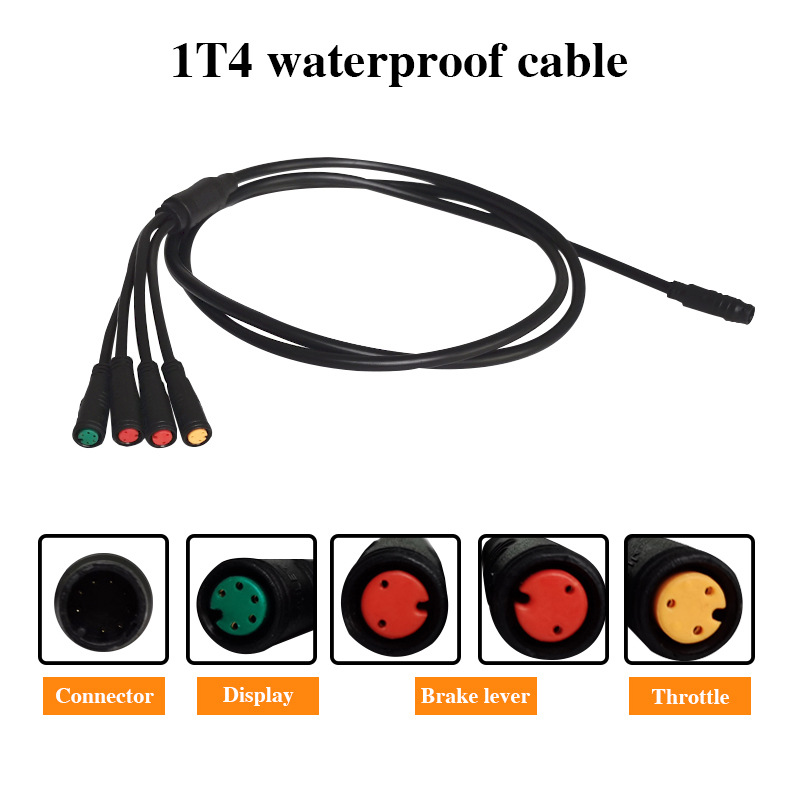
2. Appearance
Structural Design
Multi-pin connector: Available in common 2/3/4/5/6/10-pin designs, such as the 1T5 model (connects the brake, display, accelerator, and light). Clearly labeled connectors prevent mis-insertion.
Sheath Material: The outer layer is made of a smooth, abrasion-resistant, and easy-to-clean black or gray, highly elastic rubber sheath. Wire Diameter and Length: Wire diameter typically ranges from 2.5mm² to 4mm², with lengths ranging from 1.5m to 3m, meeting vehicle frame wiring requirements.
Marking and Color
Function markings are printed on the connectors, and some models are color-coded (e.g., red for power, black for ground).
The cable is entirely black, and some high-end models feature reflective sheathing for enhanced safety at night.
3. Material Composition
Conductor: High-purity oxygen-free copper (OFC), offering strong conductivity, low resistance, and reduced energy loss.
Insulation: Cross-linked polyethylene (XLPE), offering high-temperature resistance (105°C), aging resistance, and excellent insulation properties.
Sheath: Thermoplastic polyurethane (TPU) or rubber, with an IP66 waterproof rating, UV resistance, and chemical resistance.
Connector: High-strength plastic (e.g., PA66) housing with gold-plated copper pins for low contact resistance and a plug-in/plug-out lifespan exceeding 500 cycles.
4. Types and Classifications
Classification by Function
Main Power Cable: Connects the battery and controller, supports high current (e.g., over 10A), and has a thicker wire diameter.
Signal Cable: Transmits brake, accelerator, and display signals, has a thinner wire diameter and a multi-pin design.
Sensor Cable: Connects the speed sensor and temperature sensor, and is shielded to reduce interference.
By Interface Type
Waterproof Plug: Such as the DJ7021 series, with a silicone seal and IP67 waterproof rating.
Quick Connector: Magnetic or snap-on design for easy repair and replacement.
Custom Interface: Some brands use a proprietary interface that must be compatible with the original cable.
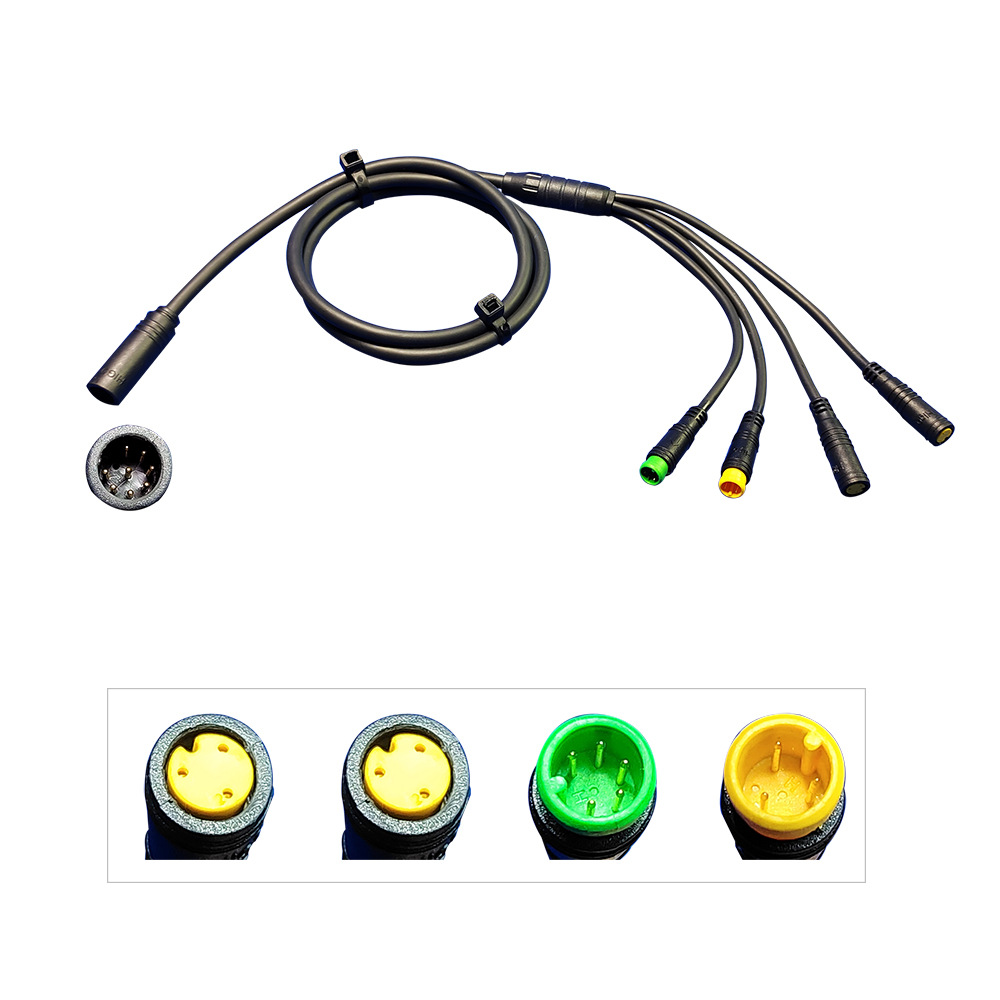
5. Instructions
Installation Steps
Disconnect the power supply: Turn off the battery switch before installation to avoid short circuits.
Mating Interface: Align the cable plug with the interface on the controller, brake, or other components, and press gently until it clicks to secure.
Securing the Cable: Secure the cable to the frame with cable ties or cable ducts to prevent friction with the wheel or chain. Test Function: Turn on the power and check whether the brake power-off and throttle response are normal.
Precautions
Avoid excessive cable bending (bend radius ≥ 5 times the wire diameter) to prevent internal conductor breakage.
Regularly check the connector seals for integrity; replace any damaged ones promptly.
6. Application Scenarios
Daily Commuting: The waterproof cable withstands rainy riding, preventing rainwater from seeping into the controller and causing malfunctions.
Off-Road Riding: The wear-resistant sheath and high-temperature resistance adapt to complex road conditions and prolonged use.
Shared E-Bikes: The connector has a long plug-in/plug-out life, meeting the needs of frequent assembly and disassembly.
Modification and Upgrade: Compatible with a variety of voltages and controller models, making it easy to replace the original cable.
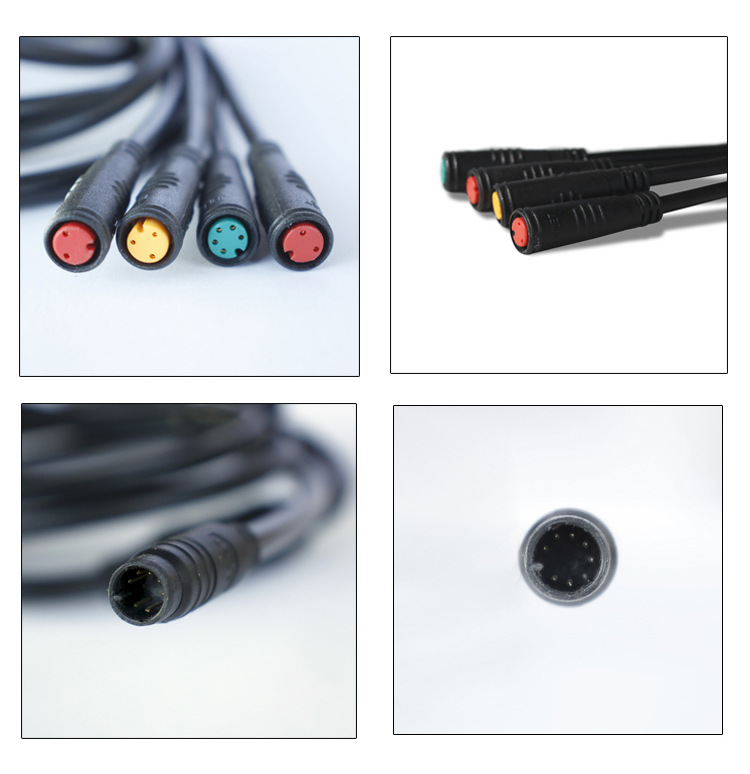
7. Care and Maintenance
Daily Cleaning: Wipe dust off the cable surface with a dry cloth. If there is heavy dirt, gently wipe with a damp cloth (do not soak in water). Allow to dry before use.
Avoid using organic solvents such as alcohol or gasoline to prevent sheath degradation.
Regular Inspections: Monthly inspections: Check for loose connectors, cracks in the sheath, and any pinching of the cable. Test every six months: Use a multimeter to check the cable resistance. Replace the cable if it shows an abnormally high resistance.
Storage Recommendations
When not in use for an extended period, coil the cable into a loop with a diameter of ≥ 20 cm and hang it to avoid folding.
Store in an ambient temperature of 0°C to 40°C, with a humidity of ≤ 70%, away from corrosive gases.