

1. Overall Design of an Electric Bicycle
Electric bicycles have a design that's somewhere between traditional bicycles and motorcycles, emphasizing lightweight and streamlined lines. They adopt a road bike wheelbase design, matching wheel diameters for harmonious overall proportions, and offer color combinations and nighttime ambient lighting, balancing practicality and personalization.
Materials and Craftsmanship
Frame: High-end models utilize T700 carbon fiber, aluminum alloy, or magnesium alloy frames, balancing strength and lightness (total weight 40-50 pounds).
Details: Hidden folding buckles, seamless welding, and anti-corrosion coatings enhance durability and aesthetics.
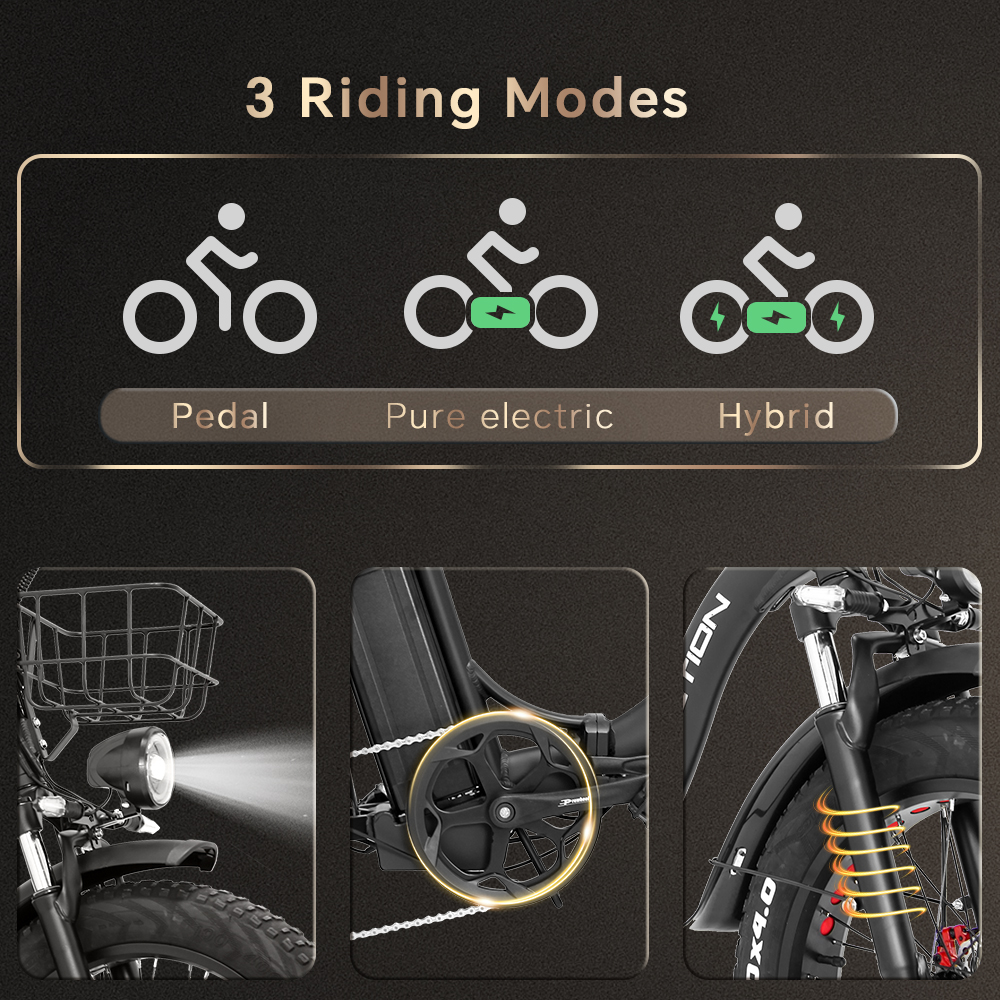
2. Structural Components: Mechanical and Electrical Synergy
Mechanical Section
Frame System: Includes the top tube, seat stays, and seat post, supporting the bike and transmitting riding force.
Drivetrain: Pedals, cranks, chainrings, chain, flywheel, and rear derailleur, enabling human propulsion.
Wheel System: Rim, hub, spokes, and tires (thinner tires reduce rolling resistance, while wider tires enhance shock absorption). Braking System: Rim brakes (mechanical lever type) or axle brakes (brake axle housing type) ensure safe and stable stopping.
Electrical
Powertrain:
Motor: Mid-mounted liquid-cooled motor or hub motor. Mid-mounted motors offer a stable center of gravity and excellent heat dissipation, while hub motors have a simple structure and low cost.
Battery: 36V lithium iron phosphate battery (high safety) or 48V lithium-ion battery (high energy density). Capacity directly affects range.
Control System:
Controller: Processes throttle signals and controls motor output.
Sensors: Torque sensor (outputs power based on pedaling force), cadence sensor (adjusts power assist based on pedaling frequency), speed sensor (monitors vehicle speed).
Auxiliary Components: Display instruments (battery charge, speed, mileage), lights, power lock, etc.
3. Factors Affecting Speed
Hardware Parameters
Motor Power: Higher-power motors (e.g., 1000W+) provide greater power, but must comply with local regulations (e.g., the 25km/h speed limit in Europe). Battery Voltage: 48V batteries output higher voltage than 36V batteries, improving acceleration performance.
Vehicle Weight: Lightweight vehicles (40-50 lbs) accelerate faster, while heavier vehicles (70+ lbs) struggle climbing hills.
External Conditions
Terrain: Top speed is easily achieved on flat roads, while hills require a high-torque motor.
Wind Drag: Air resistance increases significantly at high speeds, and a streamlined design can minimize its impact.
Load: Speed decreases when the rider's combined weight exceeds the rated load.
Regulatory Limitations
Europe: Vehicles with power >250W and speed >25 km/h are classified as L1E and require a driver's license and insurance.
China: The new national standard limits speed to 25 km/h and motor power ≤400W.
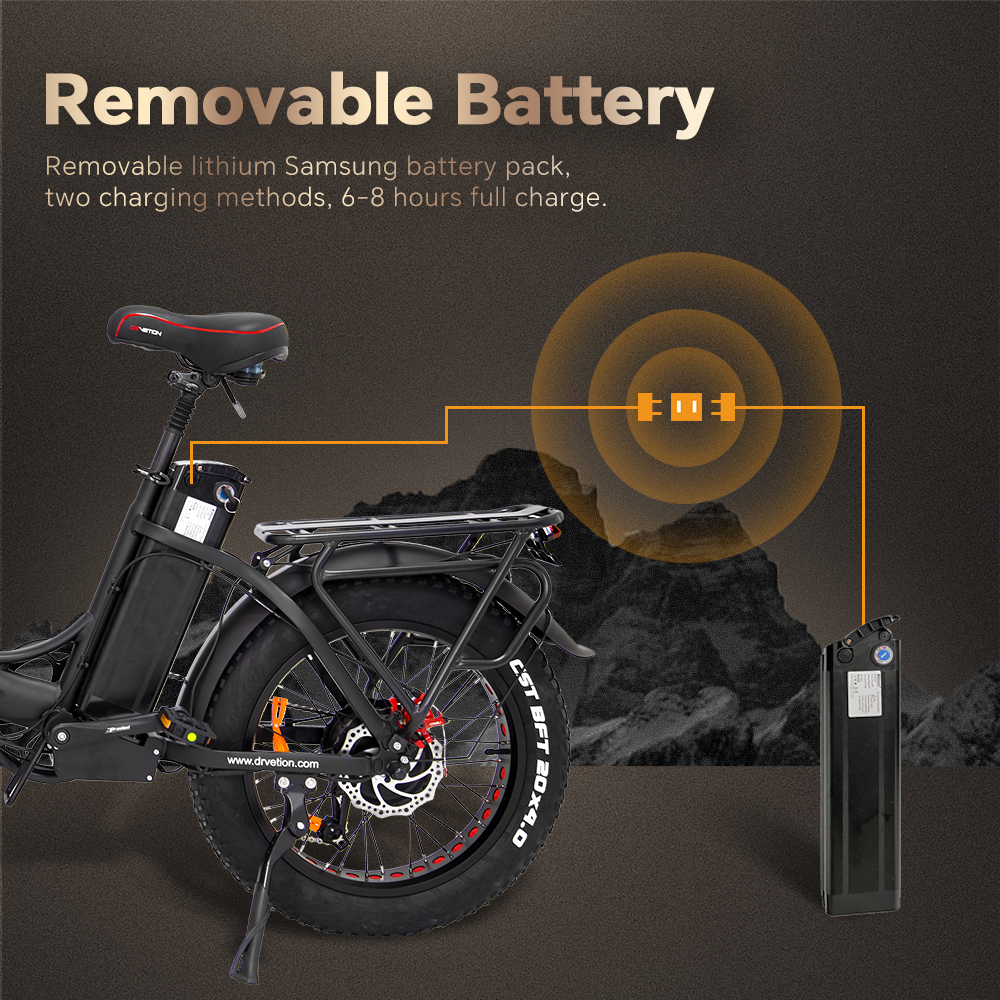
4. Application Scenarios: Comprehensive Coverage
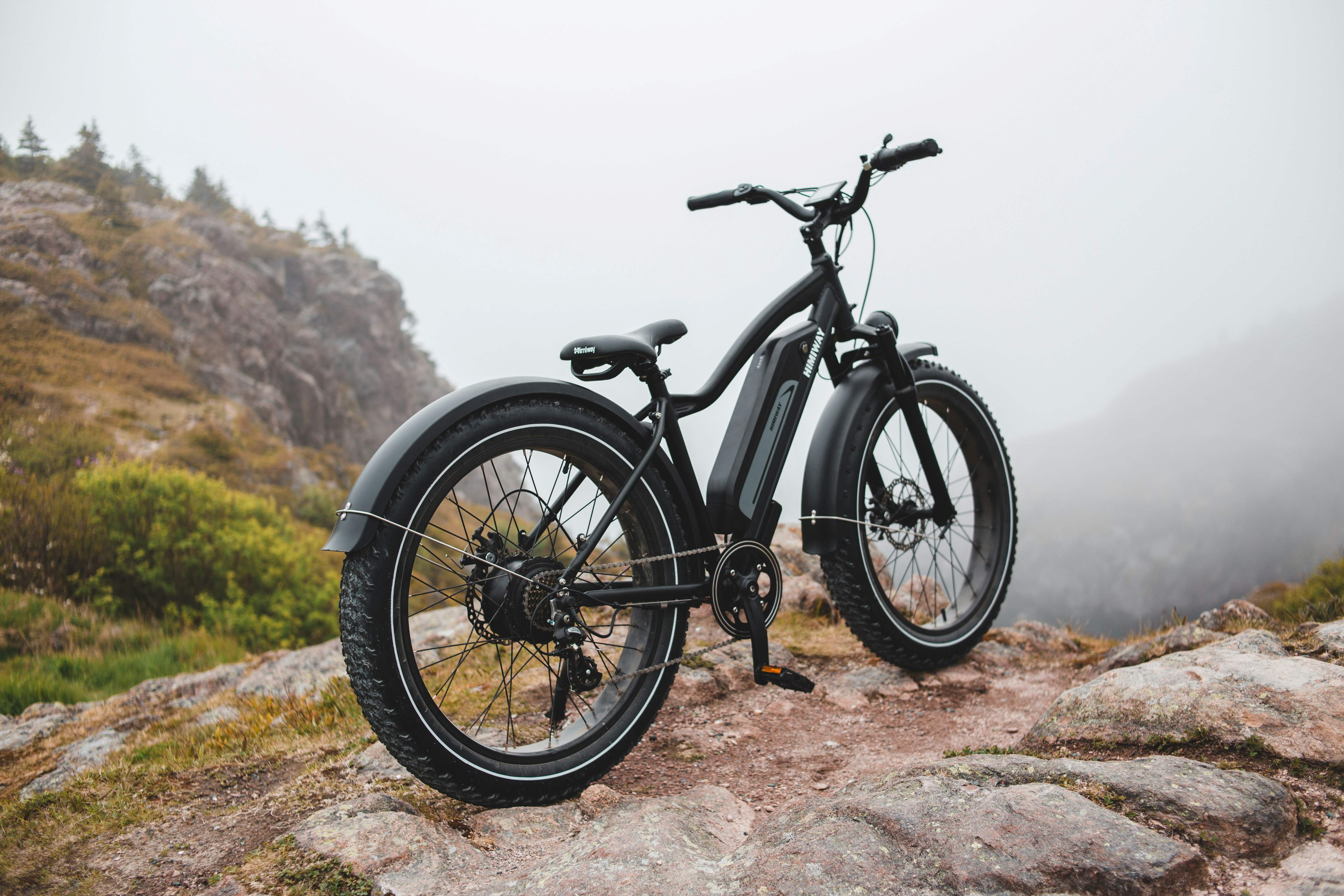
Daily Commuting: Comfort/Cruising e-bikes equipped with an ultra-comfortable saddle, cargo rack, and lighting are suitable for short distances. Mountain Adventures: Mountain e-bikes with suspension forks, wide tires, and high-torque motors easily handle challenging terrain.
City Leisure: Folding e-bikes are easy to carry, perfect for subway connections or short trips.
Long-Distance Travel: Long-Range E-bikes with large-capacity batteries and fast-charging technology.
5. Selection Guide: Accurately Match Your Needs
Select by Purpose
Commuting: Prioritize comfort, focusing on range, load capacity, and anti-theft features.
Sports and Fitness: Choose a mountain bike, focusing on motor torque, suspension performance, and transmission system.
Portable Travel: Choose a foldable model, focusing on folded size, weight, and material.
Select by Budget
Entry-Level: Basic features, suitable for short trips.
Mid-Range: Carbon fiber frame, mid-mounted motor, high-quality battery.
High-End: Smart sensors, long range, and customizable options.
6. Care and Maintenance: Extending the Lifespan
Daily Cleaning: Wipe the frame with a soft cloth, avoiding direct high-pressure water jets on electronic components.
Dry thoroughly after cleaning to prevent rust.
Battery Maintenance
Charge immediately when the battery level drops below 30% to avoid over-discharge.
During long-term storage, store batteries separately in a cool, dry place.
Key Component Inspection
Tires: Regularly check tire pressure and wear to prevent blowouts.
Chains: Clean and lubricate to reduce transmission resistance.
Brakes: Check brake pad thickness and response speed to ensure effective braking.
Professional Maintenance
Check the motor and controller connections for looseness every six months.
Perform a comprehensive maintenance annually, including bearing lubrication and gear adjustment.