

As urban low-carbon travel becomes increasingly popular, electric bicycles have become the most mainstream short-distance commuting tool for urban residents. Frequent road traffic, complex road conditions and diverse usage scenarios have raised stricter safety requirements for core vehicle components. Among all key parts, the safety performance of core control components directly determines riding safety and vehicle stability. In recent years, continuous safety standard upgrades have effectively solved the safety loopholes of traditional control equipment, adapting to the high-frequency and high-density operation characteristics of urban commuting scenarios.
Modern urban traffic management focuses on standardized and safe travel, which promotes the iterative upgrading of industry safety norms. The traditional control equipment on the market has problems such as unregulated power output, missing overspeed protection and imperfect fault early warning, which easily lead to sudden acceleration, stalling and even electrical failures during riding. The newly updated industry safety standards have formulated unified specifications for operating temperature, current load, speed limit and fault protection mechanisms. As the core control component of electric travel tools, the E-bike controller must fully comply with upgraded safety standards, realizing intelligent power adjustment and real-time risk monitoring during urban commuting, and greatly reducing the incidence of traffic safety accidents.
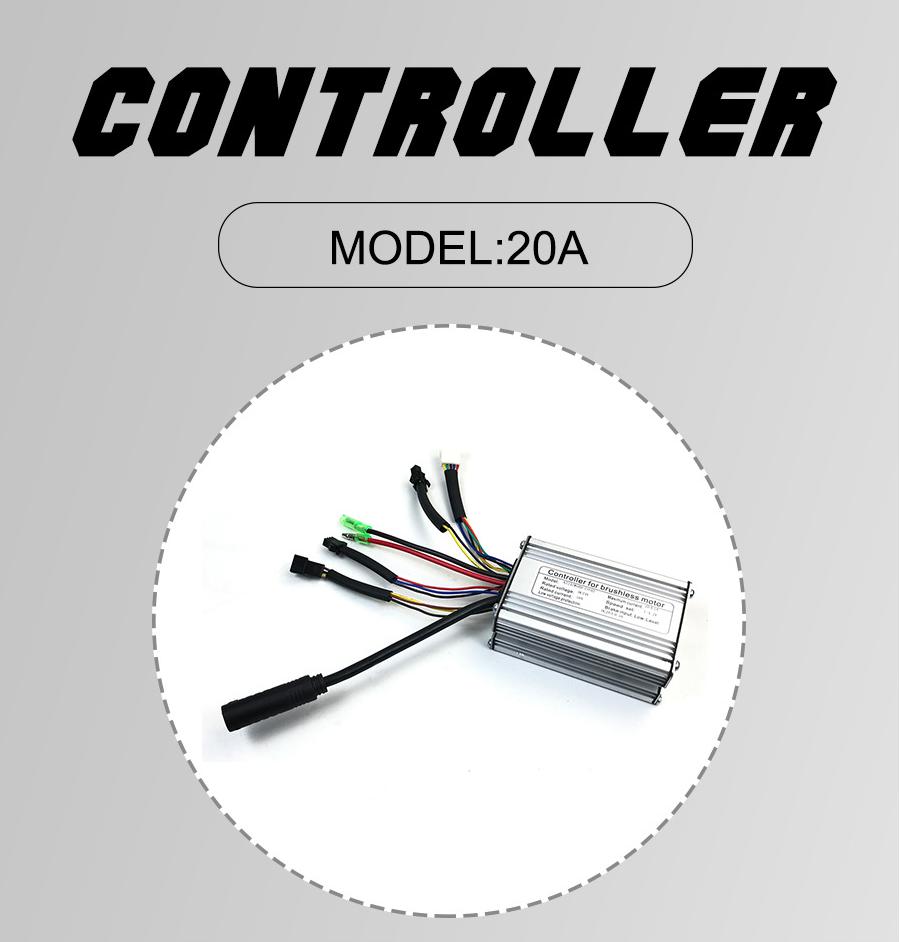
Overload protection and temperature resistance are the key upgrade directions of new safety standards. Urban commuting is characterized by frequent start-stop, climbing and load changes, which easily cause long-term overload operation of vehicle control systems and accelerate component aging. The upgraded safety norms strictly limit the maximum current and continuous working temperature of control equipment. Different from traditional products with single protection functions, the optimized Electric bike motor controller is equipped with dual protection mechanisms of overcurrent cutoff and overheating power-off. When the vehicle encounters abnormal working conditions such as road congestion and long-time high-load operation in the city, it can automatically adjust the operating state to avoid component burnout and hidden electrical dangers.
Anti-tampering and intelligent safety monitoring are another important upgrade of urban commuting safety standards. Many safety hazards in urban roads come from private modification of vehicle parameters to pursue higher speed and power, which destroys the original safety design of vehicles. The new industry standards add anti-disassembly and anti-modification design specifications for core control parts. The upgraded Bicycle motorized controller solidifies core operating parameters through program encryption and hardware locking, effectively preventing illegal parameter modification. Meanwhile, it supports real-time fault self-inspection, which can accurately identify circuit abnormalities, motor faults and battery connection problems, and feed back fault information to users in time.
The implementation of upgraded safety standards has standardized the production and application of electric bicycle control equipment, completely changing the uneven quality of traditional products. For urban traffic safety management, unified safety standards reduce hidden dangers caused by unqualified control components, standardize the operation of electric bicycles on urban roads, and optimize the urban low-carbon travel environment. For users, the optimized control equipment with comprehensive safety protection can effectively avoid sudden vehicle failures during commuting, ensuring stable and safe daily travel.
In general, the continuous safety standard upgrades of core control components are crucial to standardizing the development of urban electric bicycle travel. With the continuous improvement of urban traffic safety systems, high-safety and standardized control equipment will become the industry mainstream, providing solid technical and product support for safe, efficient and standardized urban short-distance commuting.