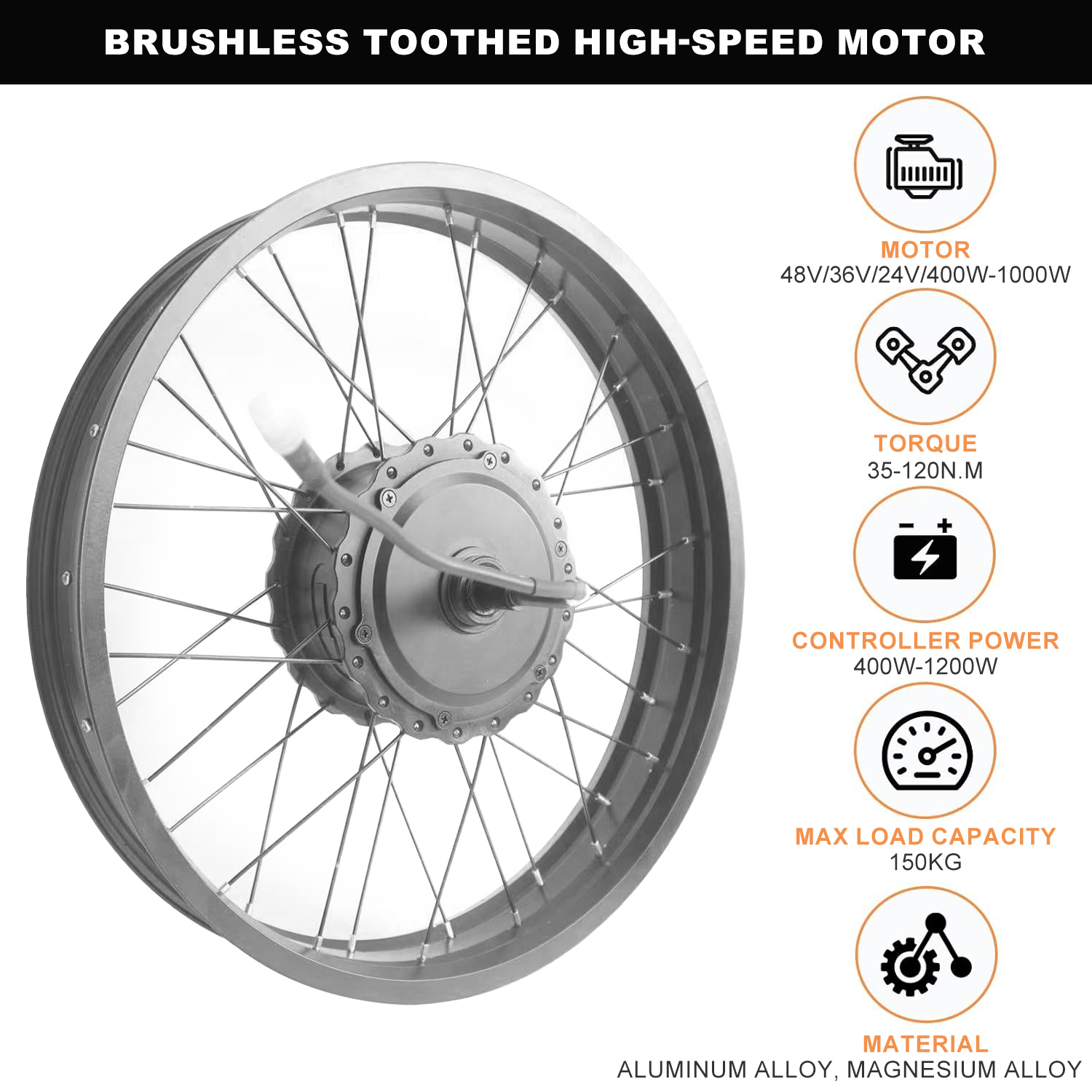
Ebike Conversion Kit is a device kit that converts ordinary bicycles into electric bicycles. Its core components include:
Motor hub: usually front-wheel or rear-wheel drive, providing power output.
Battery pack: mostly 18650 lithium-ion batteries, with capacities ranging from 36V 13Ah to 48V 3000Wh, and a range of up to 30-60 kilometers.
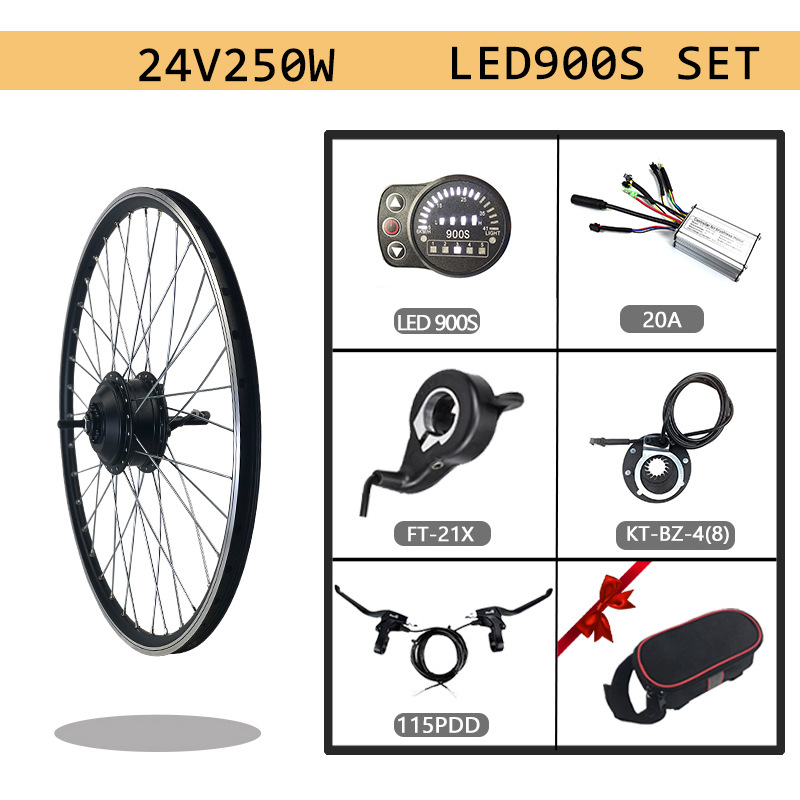
Controller: manages motor power output and supports intelligent adjustment.
Display unit: displays speed, power, riding mode and other information in real time.
Sensor: such as Hall sensor, used to detect pedaling frequency or torque, and realize intelligent switching between manpower and electricity.
Installation accessories: including wiring harness, fixing bracket, charger, etc.
Bicycle electric conversion kit materials and features
Lightweight design:
Aluminum alloy material is widely used in motor housing and battery compartment, taking into account both strength and weight (such as LVBU KN series battery compartment weighs only 3kg).
Waterproof and dustproof:
The motor and controller usually have IP65 waterproof and dustproof capabilities to adapt to complex environments.
Modular design:
The battery, motor and controller can be replaced independently, which is convenient for upgrading or repair.
Intelligent control:
Supports multi-mode switching (such as economic mode, sports mode, free cruising mode) to adapt to different riding needs.
Advantages of E-bike conversion system
Battery life and power:
Take the LVBU KN series as an example, the 36V 6Ah battery can support 60 kilometers of battery life, which meets daily commuting; high-end kits such as the Bafang 36V 250W motor have an efficiency of more than 80% and stable power output.
Charging efficiency:
Fast charging technology can fully charge the battery in 2-4 hours, reducing waiting time.
Lightweight and durability:
The weight of the motor is controlled at 3-5 kg, and the battery pack uses high-density lithium-ion batteries with a cycle life of more than 1,000 times and a service life of up to 5-10 years.
Energy saving and environmental protection:
Compared with traditional fuel vehicles, the electric mode reduces carbon emissions by more than 90%, which helps green travel.
Economical:
The cost of conversion is only 1/3 to 1/2 of that of buying a new electric bicycle, and the maintenance cost is low.
Adaptability:
Supports multiple riding modes (pure electric, power-assisted, human) to meet the needs of different scenarios.
Electric bicycle upgrade kit application scenarios
Urban commuting:
In short-distance travel (such as 5-15 kilometers), the electric modification kit can greatly reduce physical exertion and improve commuting efficiency.
Leisure riding:
In mountainous areas, parks and other scenarios, the power-assisted mode can help riders easily cope with slopes and extend the riding distance.
Special needs:
Suitable for the elderly, those with weak physical strength or those in recovery, to stay healthy through low-intensity riding.
Sharing economy:
Shared bicycle companies can quickly launch electric shared bicycles through modification kits to reduce operating costs.