

For electric bike riders, riding stability and responsive control are the foundation of a safe and comfortable experience—whether commuting in the city, navigating suburban roads, or tackling gentle slopes. Many riders overlook the core component that dictates these two key factors: a critical device that regulates power flow within the vehicle’s system. This component acts as the "brain" of the electric bike, orchestrating every aspect of power delivery, and its design directly impacts how smoothly the bike rides and how quickly it responds to the rider’s commands. This article explores how this critical component enhances riding stability and response, demystifying its role in elevating the overall e-bike experience.
Riding stability is especially crucial when facing uneven terrain, sudden turns, or varying speeds, and the Electric Bicycle Controller is instrumental in maintaining this stability. Unlike traditional bicycles that rely solely on the rider’s physical strength, electric bikes depend on consistent power output to stay balanced. This component adjusts the current and voltage delivered to the vehicle’s motor in real time, ensuring a steady flow of power even when the rider changes speed or encounters obstacles. For example, when climbing a slope, it increases power gradually to prevent the bike from stalling or jerking, while on flat roads, it reduces power to maintain a smooth, consistent speed—eliminating sudden surges that could throw the rider off balance.
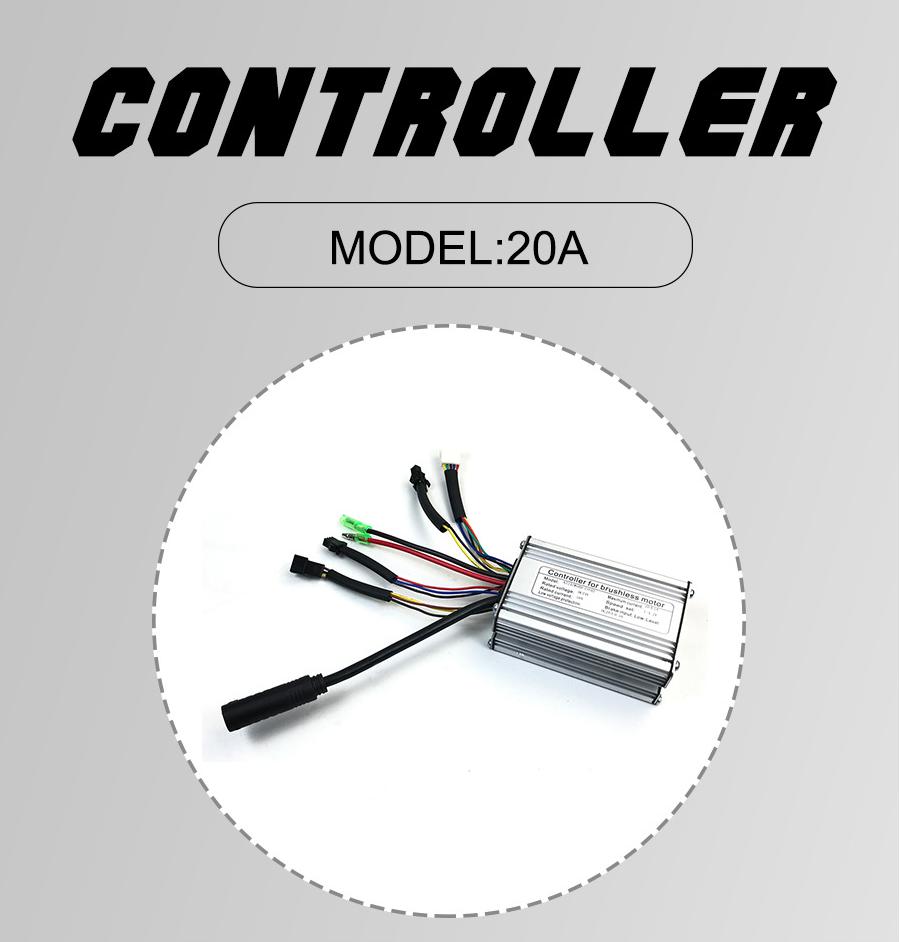
Response speed, another key aspect of riding experience, refers to how quickly the electric bike reacts to the rider’s input, such as twisting the throttle or pedaling. The E-bike controller is responsible for translating these inputs into immediate power adjustments, ensuring minimal lag between the rider’s action and the bike’s response. High-quality versions of this component use advanced algorithms to process input signals rapidly, delivering power within milliseconds. This quick response is particularly important in busy urban environments, where riders may need to accelerate suddenly to avoid traffic or slow down quickly to navigate tight spaces—helping riders stay in control and avoid accidents.
Beyond basic power regulation, this component also incorporates safety features that further enhance riding stability. For instance, it includes overcurrent protection, which prevents the motor from receiving too much power and overheating—an issue that could lead to sudden power loss and instability. It also features speed limit control, which ensures the bike doesn’t exceed safe speeds, reducing the risk of skidding or loss of control. These built-in safeguards work in tandem with the component’s power management to create a more stable and reliable riding experience, even for less experienced riders.
The Bicycle motorized controller differs from standard versions in its ability to adapt to different riding conditions, further boosting stability and response. Designed to work with motorized bicycle systems, it can adjust power delivery based on factors like rider weight, terrain, and battery level. For example, if the battery is low, it reduces power output gradually to maintain stability, rather than cutting power abruptly. This adaptability ensures that the bike performs consistently across different scenarios, from steep hills to flat city streets, providing a smooth ride regardless of the conditions.
The Electric bike motor controller takes this adaptability a step further, integrating seamlessly with the bike’s motor to optimize performance. It communicates with the motor to adjust torque and speed, ensuring that the bike responds precisely to the rider’s commands. For example, when the rider twists the throttle slightly, it signals the motor to deliver a small burst of power, resulting in a smooth acceleration. When the rider eases off the throttle, it reduces power gradually, preventing sudden deceleration that could cause the bike to lurch. This precise coordination is what makes modern electric bikes feel intuitive and easy to control.